Quick Answer: What a Slab Leak Is and What to Do First
A slab leak is a water line break beneath your concrete foundation, usually in a copper supply line or, in newer Dayton homes, a PEX or CPVC line run through the slab. Detection uses non-invasive tools to locate the leak within inches before any concrete is opened. Repair is either a spot fix, a reroute through walls and ceilings, or a full repipe, depending on the pipe condition.
If you suspect a slab leak right now, take these steps in order:
- Shut off the main water valve to your home.
- Turn off the water heater if the hot side is leaking (warm floor is a clue).
- Photograph cracks, warm spots, and any visible moisture for your insurance file.
- Call a licensed leak detection team, not a general plumber guessing with a hammer.
- Do not run dehumidifiers on saturated flooring before extraction, it spreads vapor into walls.
Signs You Have a Slab Leak in Dayton
- Unexplained spike of 20 to 60 percent on your water bill
- Warm or hot patches on tile or laminate floors
- Sound of running water with all fixtures off
- Mildew smell near baseboards or in closets on the ground floor
- Foundation cracks that appeared in the last 6 to 12 months
- Low water pressure throughout the home
- Damp carpet edges with no obvious source above
- Hairline cracks in grout lines that keep reopening after repair
- The water meter dial creeping when every fixture is off
How Professional Slab Leak Detection Works
Real detection is a process, not a guess. At Dayton Water Restoration, we layer three or four methods to pinpoint the leak before recommending any concrete work. This protects your floors, your budget, and your insurance claim.
| Method | What It Does | Typical Accuracy |
|---|---|---|
| Acoustic listening | Amplifies the hiss of pressurized water escaping the pipe | Within 6 to 12 inches |
| Thermal imaging | Maps temperature differences from hot water lines | Within 1 to 2 feet |
| Pressure testing | Isolates hot vs cold side to confirm which line failed | Confirms side, not location |
| Tracer gas | Injects safe helium or nitrogen blend, sniffed at surface | Within 2 to 6 inches |
| Moisture mapping | Measures subfloor and slab moisture content | Maps wet zone for drying |
If hidden moisture is showing up in walls too, our team often pairs slab work with hidden leak detection behind walls to make sure you only open the home once.
What the Inspection Visit Looks Like
- Walk-through and history of symptoms (15 to 20 minutes)
- Meter isolation test to confirm active leak
- Acoustic and thermal sweep of suspected zones
- Tracer gas confirmation when needed
- Written report with leak location, photos, and repair options
The whole visit usually takes 90 minutes to three hours depending on home size and how many false signals the slab is giving off. Tile floors and post-tensioned slabs add time because acoustic readings have to be cross-checked against the cable layout to avoid drilling into tension cables.
What Most Companies Will Not Tell You
- A warm floor does not always mean a slab leak. Sometimes it is a radiant heating loop or a hot water line in a wall nearby.
- Foundation cracks alone are not proof. Indiana clay soil moves seasonally, and many cracks are unrelated to plumbing.
- Spot repair is fine for newer homes. You do not need a full repipe quote on a 12-year-old house with one pinhole.
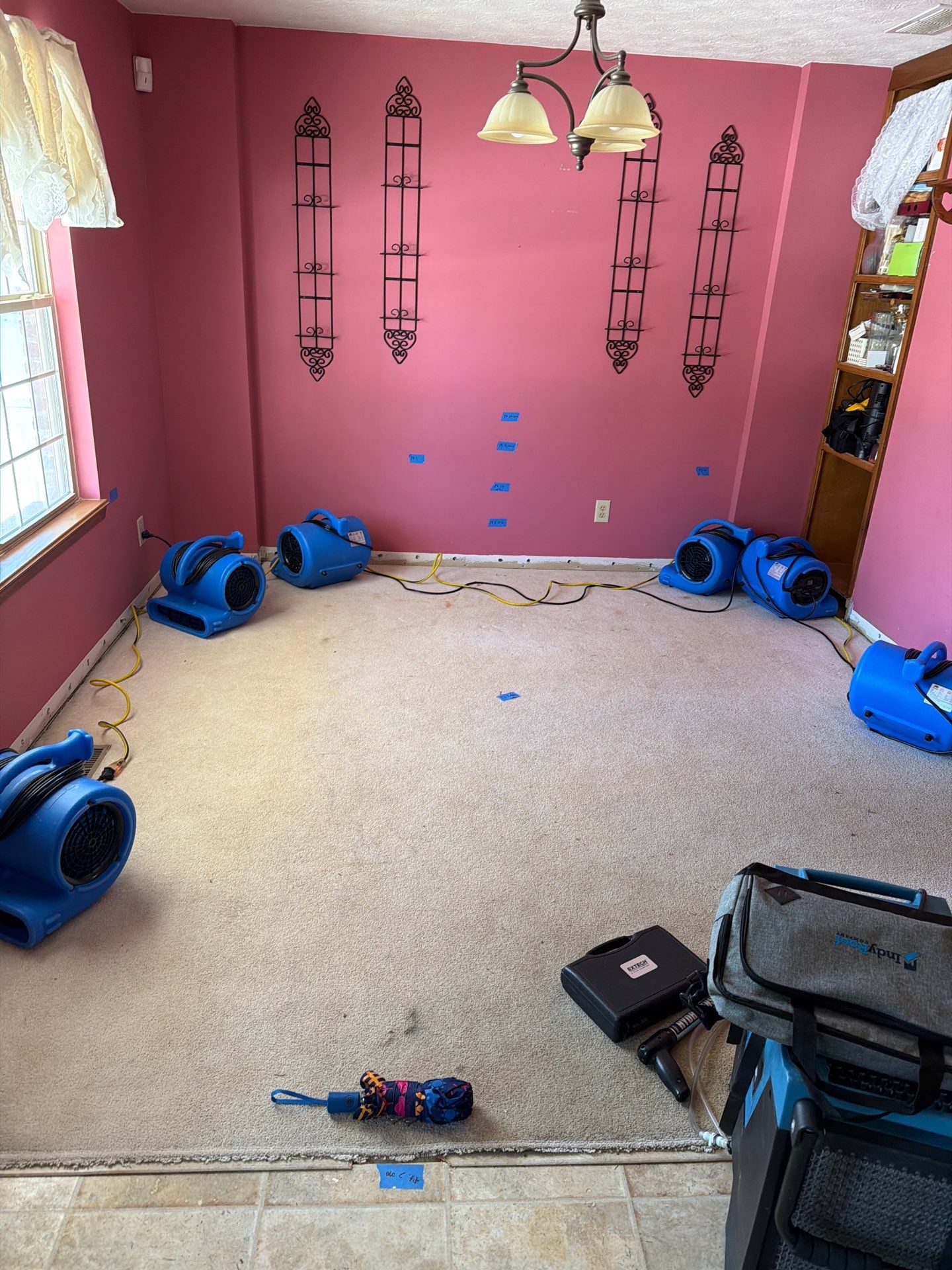
- Drying the slab matters. Trapped moisture under flooring leads to mold within 48 to 72 hours.
- Concrete patches need 24 to 48 hours before flooring goes back down, and longer for hardwood.
- Detection fees are often credited toward repair if you use the same company, ask before you book.
If standing water is still present, get extraction started before detection begins. Our water extraction service clears the area so acoustic equipment can actually hear the leak.
Under Foundation Repair Options
Once the leak is located, you have three real paths forward. The right choice depends on pipe age, leak count, and how disruptive each option is to your daily life.
- Spot repair: Concrete is cut over a small area, the pipe section is replaced, and the slab is patched. Best for a single, isolated leak in otherwise healthy copper.
- Reroute: The failed line is abandoned and a new line is run through walls or attic space, bypassing the slab entirely. Best when one section failed but the rest of the pipe is similar age.
- Full repipe: All supply lines are replaced, usually with PEX. Best when multiple slab leaks have happened or pipes are at end of life.
Typical Dayton Slab Leak Costs
| Service | Typical Range |
|---|---|
| Detection only | $350 to $750 |
| Spot repair (concrete cut, pipe fix, patch) | $1,800 to $4,500 |
| Reroute single line | $1,500 to $3,500 |
| Whole-home repipe | $6,500 to $15,000 |
| Water mitigation and drying after leak | $1,500 to $5,000 |
Most Dayton homeowners insurance policies cover the resulting water damage and tear-out, even when the pipe repair itself is excluded. Document everything before work begins. For the mitigation side, our water damage restoration team works directly with adjusters so you are not stuck translating IICRC language on the phone at 9pm.
How to Choose Between Reroute and Repipe
- Pipe age under 15 years with one leak: spot repair or reroute.
- Pipe age 20 to 30 years with one leak: reroute, because a second leak is likely within two years.
- Two or more leaks in any 12 month window: full repipe.
- Recurring pinholes on the hot side only: full repipe, the hot line degrades faster.
- Copper installed before 1990 with thin-wall stamping: full repipe is almost always cheaper long term.