Basement Flooding in Dayton, IN
Basement flooding in Dayton handled end to end, from the first pump through the insulation, drywall and flooring.
Dayton Water Restoration is the Dayton call for Basement Flooding: emergency crews around the clock, moisture readings instead of guesswork, and insurance files built properly. Call (463) 241-6041.
- Service: Basement Flooding for Dayton homeowners
- Service area: Dayton, IN and surrounding areas
- Response time: Around the clock dispatch; Dayton emergencies move to the front of the line
- Licensed and insured (License #RC21100059)
- Serving Dayton, IN since 2018
Basement Flooding Cleanup in Dayton
We'll pump out and dry a flooded basement anywhere in Dayton, day or night.
Basements Here
Full basements are common in the older homes in Dayton.
Where the Water Comes From
Homes near Wildcat Creek and the Wabash River face added flood risk after heavy rain. Many basements here depend on a sump pump to stay dry, so a pump that quits during a storm can flood the space fast.
Our crews work all over Dayton, from Weston Woods to the streets near McCutcheon High School and Dayton Town Hall. We also clean up flooded basements in Lafayette, Battle Ground, Stockwell and Clarks Hill.
Expert Basement Flooding for Dayton Homeowners
Everything you keep in the basement was on the floor, which is where the water goes first. Cardboard wicks it up the sides of a box within minutes, particleboard furniture swells at the base and doesn't come back down, and upholstery holds it for days. Dayton Water Restoration dispatches to Dayton within two hours, gets contents up off the slab and inventoried while the extraction runs, and photographs what came out before any of it leaves the house.
The crew draws your basement as a floor plan and numbers every spot where a reading gets taken. Those same spots get read again on each visit, so the map shows the wet zone shrinking over the days. You get the finished map for your Dayton home along with the photos and the daily log.
You hear from the Dayton Water Restoration crew before decisions get made. The scope gets walked with you and signed off before any drywall gets cut, the daily readings get shared at each visit, a change in scope arrives with photos and an explanation attached, and the full package of readings, photos and line items ends up in your hands when the file's closed out.
Ask a qualified technician for a written report on any furnace or water heater that sat in water, and send a copy to your adjuster, since mechanical equipment usually gets its own line in a basement claim. Dayton Water Restoration photographs the water line against those units in your Dayton basement, which shows the technician and the adjuster how high the water reached.
Shut off the water supply to the water heater or washer, then call Dayton Water Restoration at (463) 241-6041. If the breaker is reachable without stepping in water, switch off power to the appliance first. The crew documents the failure point and the wet area in your Dayton basement from the first walkthrough.
Signs You Need Basement Flooding Cleanup
If you notice any of these in your Dayton home, schedule a free inspection before the issue worsens.
Battery backup alarm sounding on the sump pump, or a backup battery that ran flat in an outage
A musty, earthy smell that hits you as soon as you open the door at the top of the stairs
The breaker feeding your Dayton sump pump has tripped and the pit is filling
Sump pit filling quickly days after the rain stopped, with the ground outside still soaked
Your water heater is leaking at the base, with water spreading across the Dayton basement floor
The sump pit full to the rim, or the pump running while the water level stays where it is
Water beading out of a wall crack during a steady rain, then drying up when the rain stops
Storage tubs in your Dayton basement sitting in standing water, with papers and photos stuck together
Batt insulation sagging out of the stud bays, darker and heavier along the bottom edge
Carpet tack strip rusting, with the pad underneath breaking apart when you lift a corner
How Dayton Water Restoration Handles Basement Flooding
We follow these steps in order on every Dayton job.
Source Check
The crew finds where the water came from and photographs it before anything moves. Seepage through a foundation wall gets handled differently from a backup out of a sanitary line, and the source decides what protective gear the job needs and which materials come out.
Moisture Mapping
Thermal imaging finds the temperature differences that mark wet material and penetrating meters confirm it with numbers. Readings get taken on drywall, framing, the bottom plate, the subfloor and the slab, and the wet area gets marked and measured room by room.
Controlled Removal
Drywall that wicked water gets cut at a measured height, wet batt insulation comes out of the bays and gets bagged, and carpet pad goes out. Material the meters show dry stays in place, and every removal gets photographed before it happens.
Contents Handling
What was stored on the floor gets photographed, inventoried, and either blocked up off the slab or carried out of the space. Soft goods and cardboard that held contaminated water leave the house, and the list of it goes in your file.
Surface Cleaning
Once removal is done, the crew cleans the slab and the framing that stay in your Dayton basement. Air scrubbers run during the work, and the surfaces are ready for the drying equipment before it goes in.
Basement Flooding in Dayton
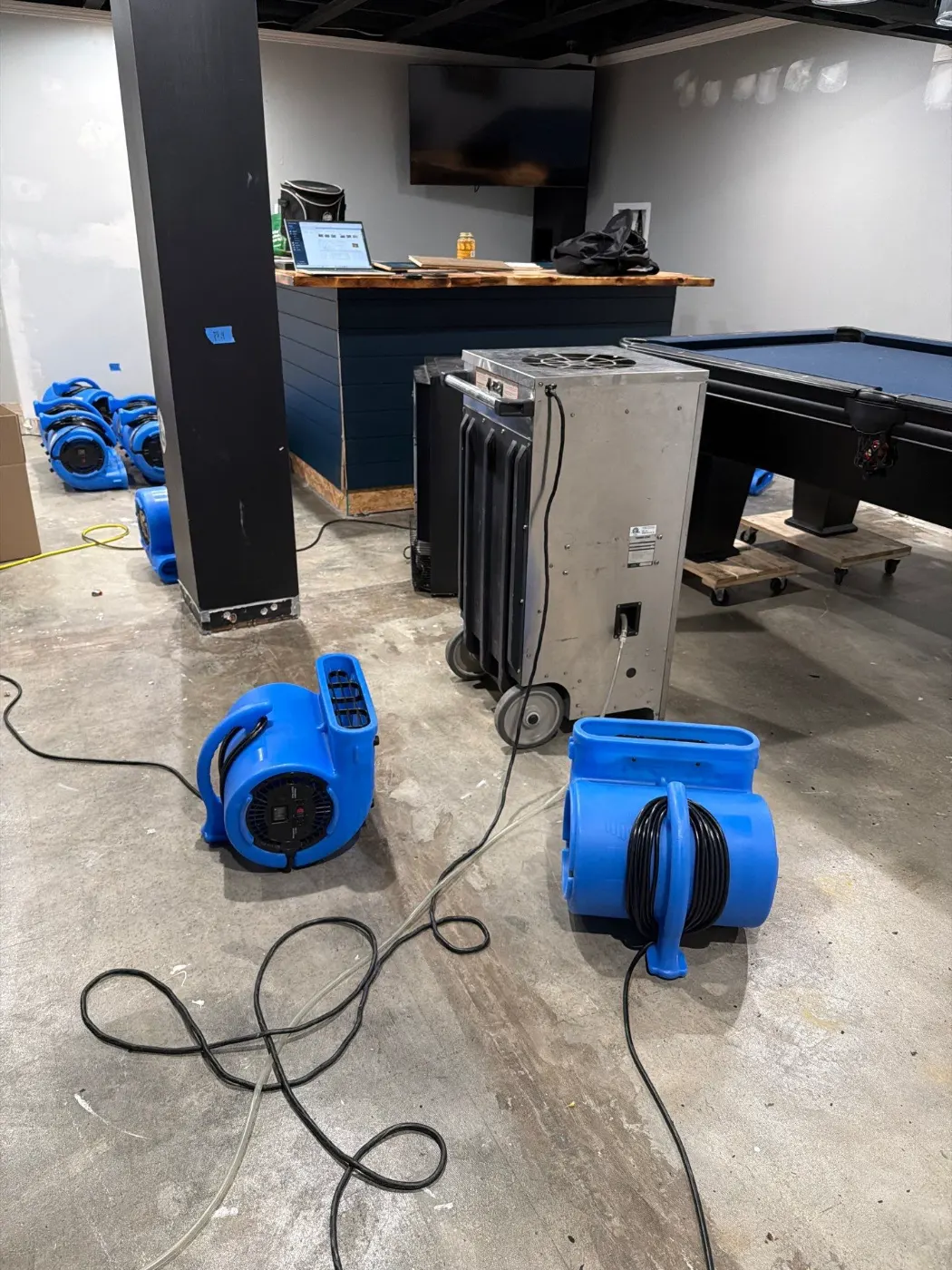
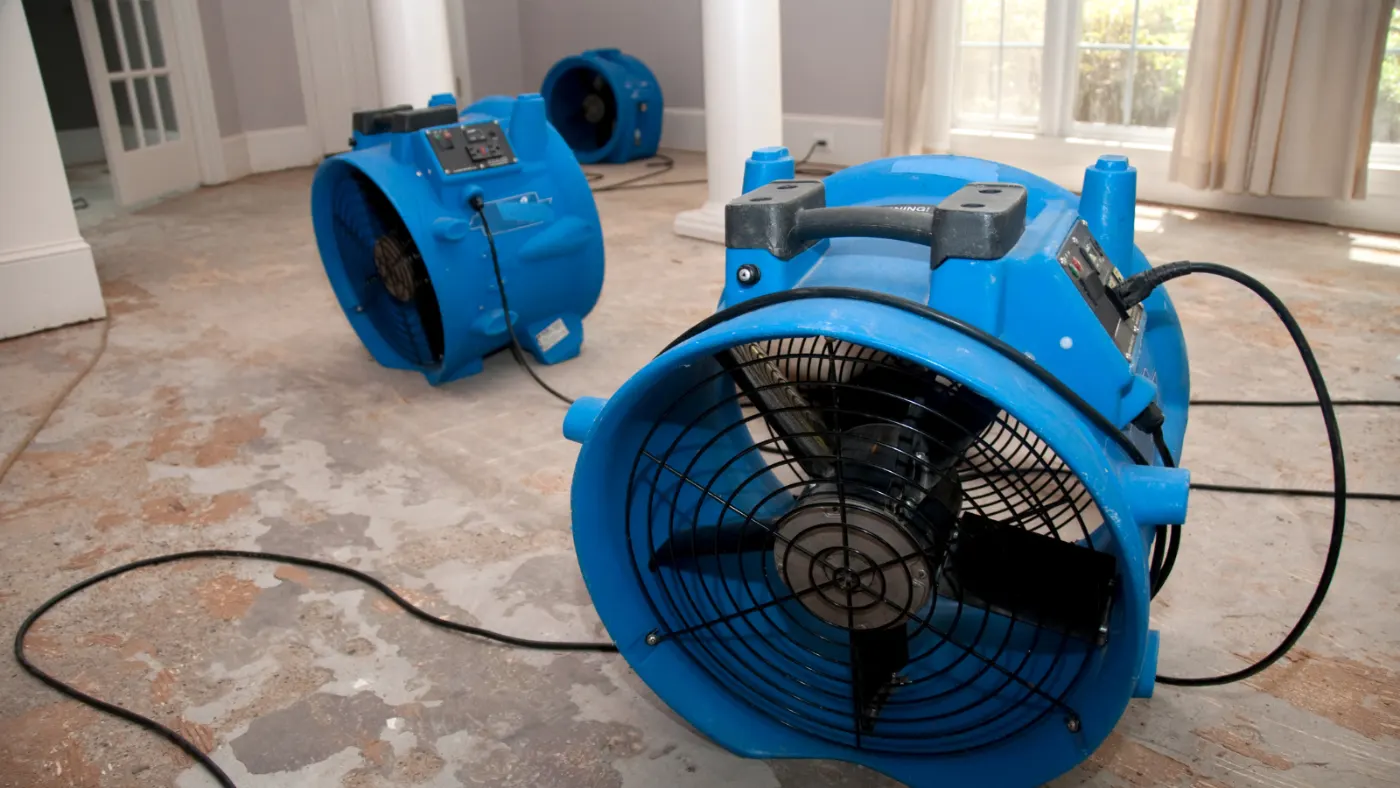
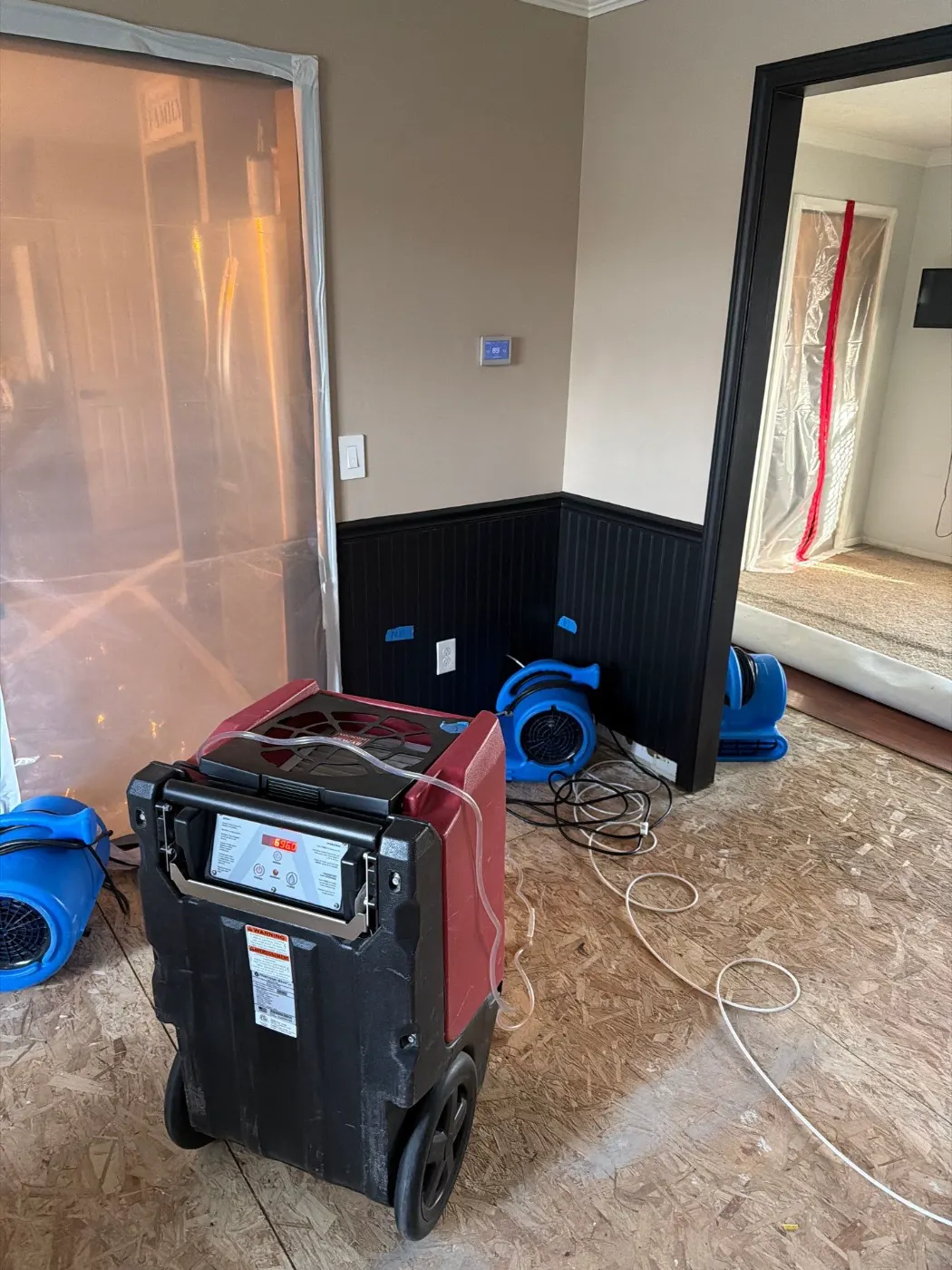
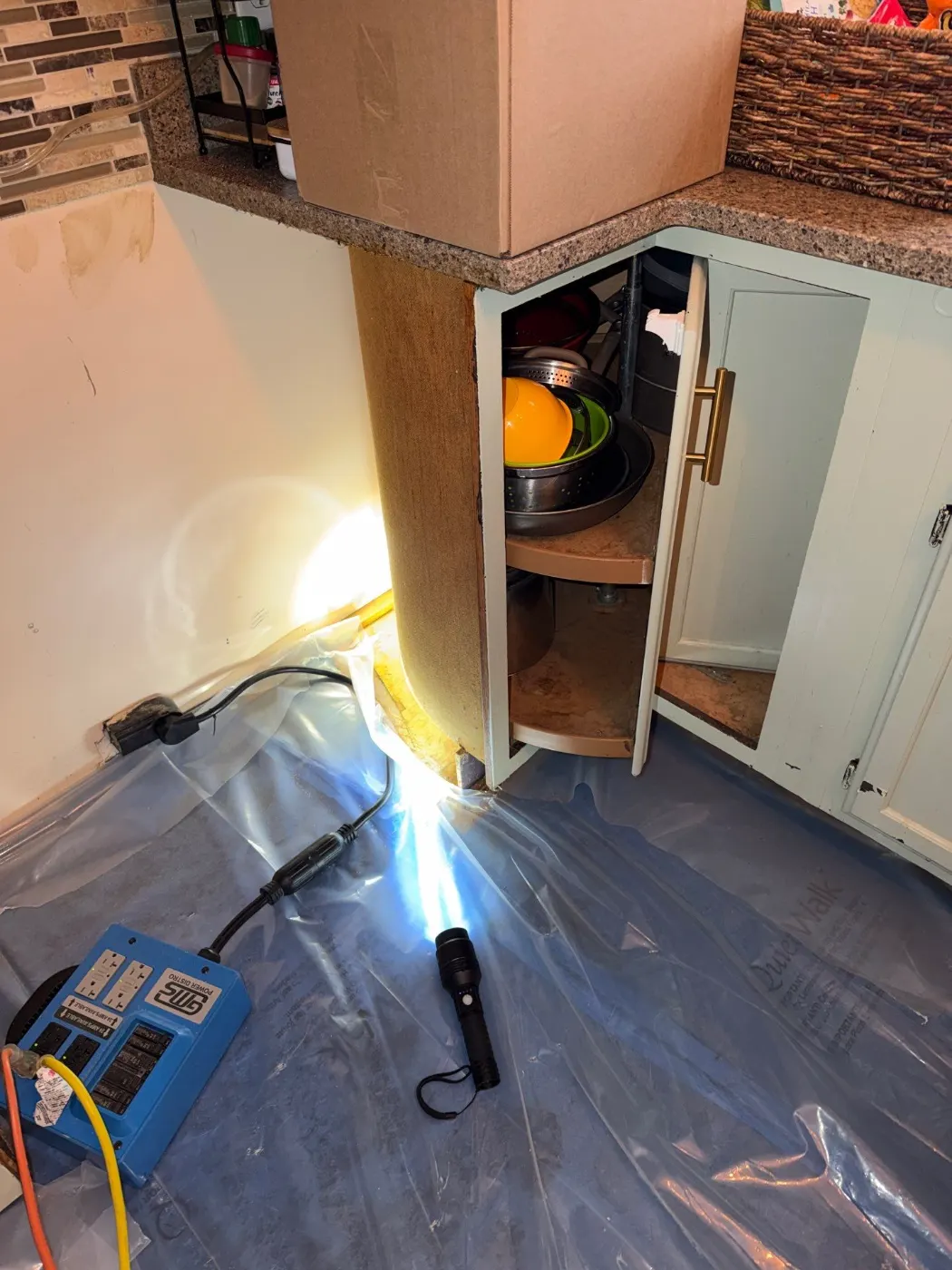
Photographs from real basement flooding jobs completed by our crew in Dayton and surrounding areas.
Basement Flooding FAQ
Questions Dayton homeowners ask us about basement flooding cleanup.
Guidance and Standards for Basement Flooding
- EPA advises drying water damaged areas and items within 24 to 48 hours to prevent mold growth. EPA: A Brief Guide to Mold, Moisture and Your Home
- Ready.gov notes that homeowners insurance policies don’t cover flooding, so check what your own policy says. Ready.gov: Floods
Dayton Neighborhoods We Serve
We take basement flooding calls in every part of Dayton. Pick your neighborhood for local details.
Other Restoration Services in Dayton
Dayton Water Restoration handles the full scope of restoration work. Explore our other services below.
Water Damage Restoration in Dayton
24/7 emergency response. IICRC certified water restoration from extraction to full dry out.
Learn more →Sewage Cleanup in Dayton
Category 3 biohazard cleanup. Full containment, decontamination, structural restoration.
Learn more →Storm Damage in Dayton
Storm related water emergencies. Tarping, extraction, drying, and full restoration.
Learn more →Request Basement Flooding Cleanup
Reach Us Directly
Our team is available 24/7 for emergencies and ready to schedule inspections during business hours.
Need Immediate Help?
For active water or mold emergencies, call us directly. We are available 24/7.