Storm Damage in Dayton, IN
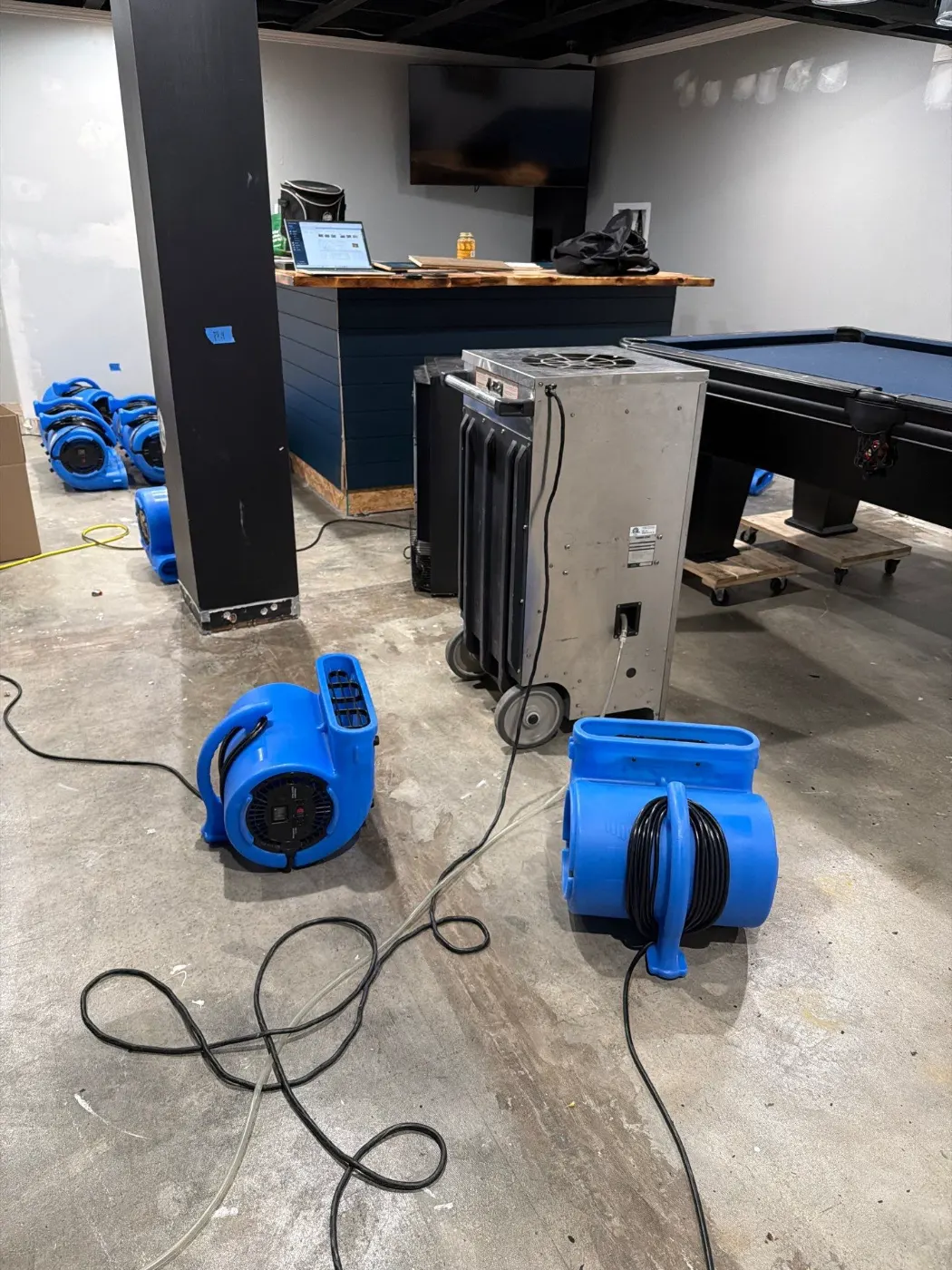
Flash flooding at grade in Dayton extracted, contained and treated as contaminated water, with photos of every step.
Storm Damage in Dayton, IN starts with one call to Dayton Water Restoration: live 24/7 dispatch, IICRC certified response, and honest written scopes before work begins. Call (463) 241-6041.
- Service: Storm Damage for Dayton homeowners
- Service area: Dayton, IN and surrounding areas
- Response time: Same day emergency response for Dayton; 24/7 availability
- Licensed and insured (License #RC21100059)
- Serving Dayton, IN since 2018
Storm Damage Cleanup in Dayton
We handle storm damage cleanup across Dayton, from tarping the opening to drying the house underneath it, and we're out day or night.
Storms Here
Severe thunderstorms come through in spring and summer, and ice storms hit some winters. If your insurance company asks for a storm date, NWS Indianapolis keeps a list of past events.
Where Storm Water Ends Up
Homes near Wildcat Creek and the Wabash River can see rising water after heavy rain. With full basements common here, a big storm can bring water in from below as well as through the roof. That makes it a basement flooding job too.
After a storm we can be anywhere in Dayton, from Weston Woods to the roads around McCutcheon High School and Dayton Town Hall. We also handle storm damage in Stockwell, Clarks Hill, Shadeland and Lafayette.
Expert Storm Damage for Dayton Homeowners
You got a tarp over the opening and the dripping stopped, so the emergency feels finished. The insulation above that ceiling is still carrying water, and it'll keep feeding moisture into the drywall and the framing for days while nothing visibly gets worse. Dayton Water Restoration crews measure what's left in the assembly on storm calls in Dayton and Tippecanoe County, and we dispatch within 2 hours to get real numbers on it before the ceiling starts to soften.
A meter reading only means something on the right scale. Drywall and wood framing read differently, so Dayton Water Restoration sets the meter for the material it's touching and logs the material type beside every number. That's how a reading taken in your Dayton home on day one can be compared with one taken on day four.
Mapping comes before cutting. Technicians walk every room under and beside the intrusion with a thermal camera to find the temperature differences wet material creates, then confirm with penetrating and pinless meters on drywall, framing, flooring and insulation. Readings get taken in unaffected rooms too, because those become the baseline that defines dry for your particular house. The map's what decides which surfaces get opened and which ones stay closed.
Storm damage that sat for a while raises questions, so the file gets built to answer them. Dayton Water Restoration documents the condition of the materials as found in your Dayton home, notes where newer damage has already started and photographs both. You decide with your insurance company what that record means, and the photos make it clearer than anybody's memory would.
Floodwater in your basement or garage calls for containment and protective gear, so it's worth a call before anyone wades in. Dayton Water Restoration extracts the water in Dayton and dries the structure afterward, with the soaked porous materials removed and photos at each stage. Call (463) 241-6041 to get a crew started.
Signs You Need Storm Damage Restoration
If you notice any of these in your Dayton home, schedule a free inspection before the issue worsens.
A musty smell that comes back in the same room after every rain and fades in between
Furnace or water heater base sitting in water after storm runoff
Puddles along an exterior wall or standing water in a basement window well after heavy rain
Water seeping in at the floor and wall joint during heavy rain
Ceiling stains in a hallway or closet far from any bathroom
Ceiling drywall sagging or bulging between the joists in a room below the attic
Window sill corners holding water or finish peeling after a windy storm
A brown or yellow ring on a ceiling that got noticeably bigger after the last heavy rain
Water on the basement floor after the power failed and the sump pump stopped
Shingle granules piled in the gutters or washed out at the bottom of a downspout
How Dayton Water Restoration Handles Storm Damage
We follow these steps in order on every Dayton job.
Contents Protection
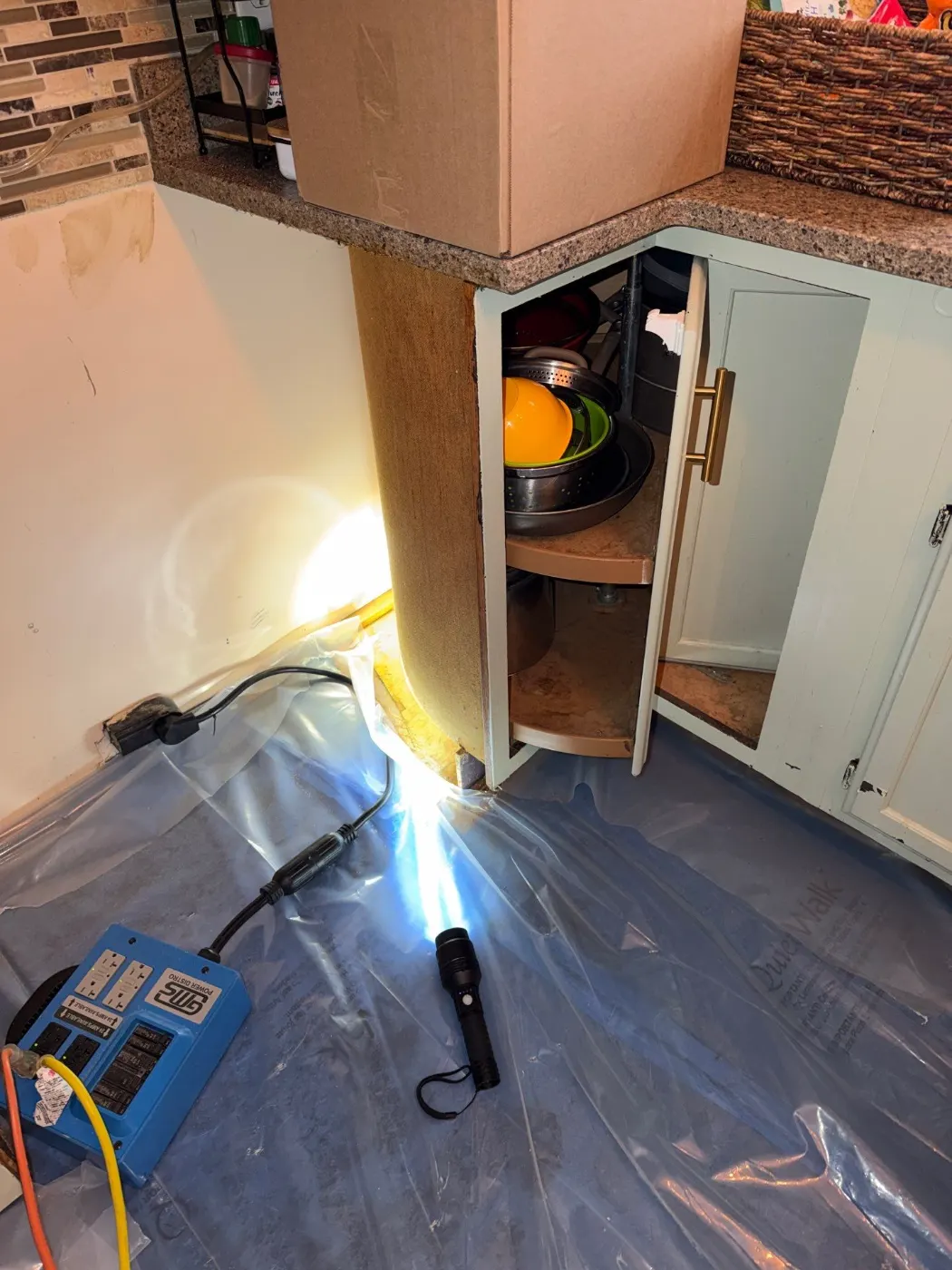
Furniture legs get blocked off wet flooring and small items move out of the water's reach, with photos taken of anything that shifts. Rugs and boxes in a flooded basement come up off the floor before extraction starts.
Wet Insulation Removal
Soaked batts and matted blown in get bagged out of the attic and the ceiling cavity, with type, depth and square footage recorded for the rebuild and for the claim. Wet insulation holds water against the ceiling board and loses its insulating value while it's wet.
Contaminated Material Removal
Porous materials soaked by floodwater, such as carpet and the lower drywall, get cut out and bagged for disposal. Cut heights are photographed and recorded, so the scope and your file show what came out and why.
Drying Equipment Setup
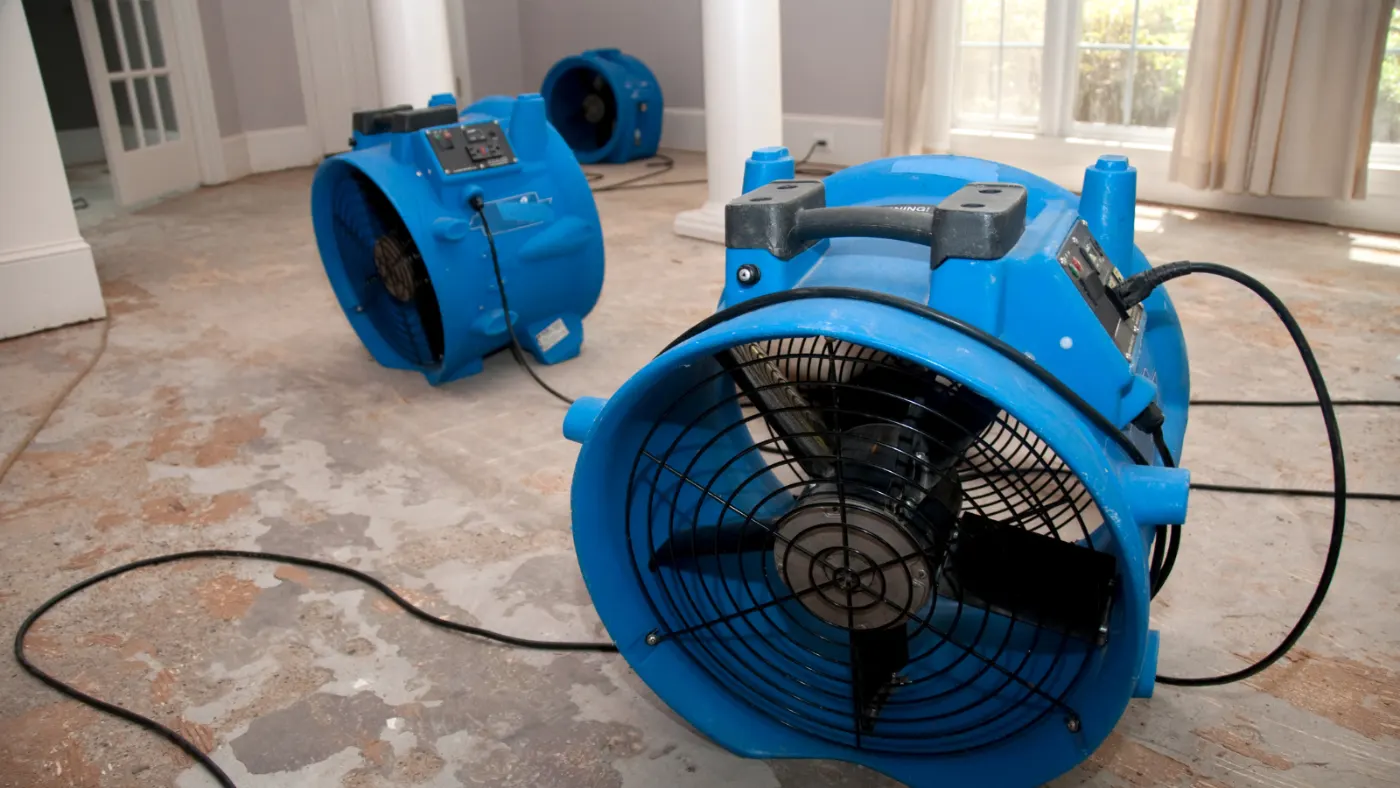
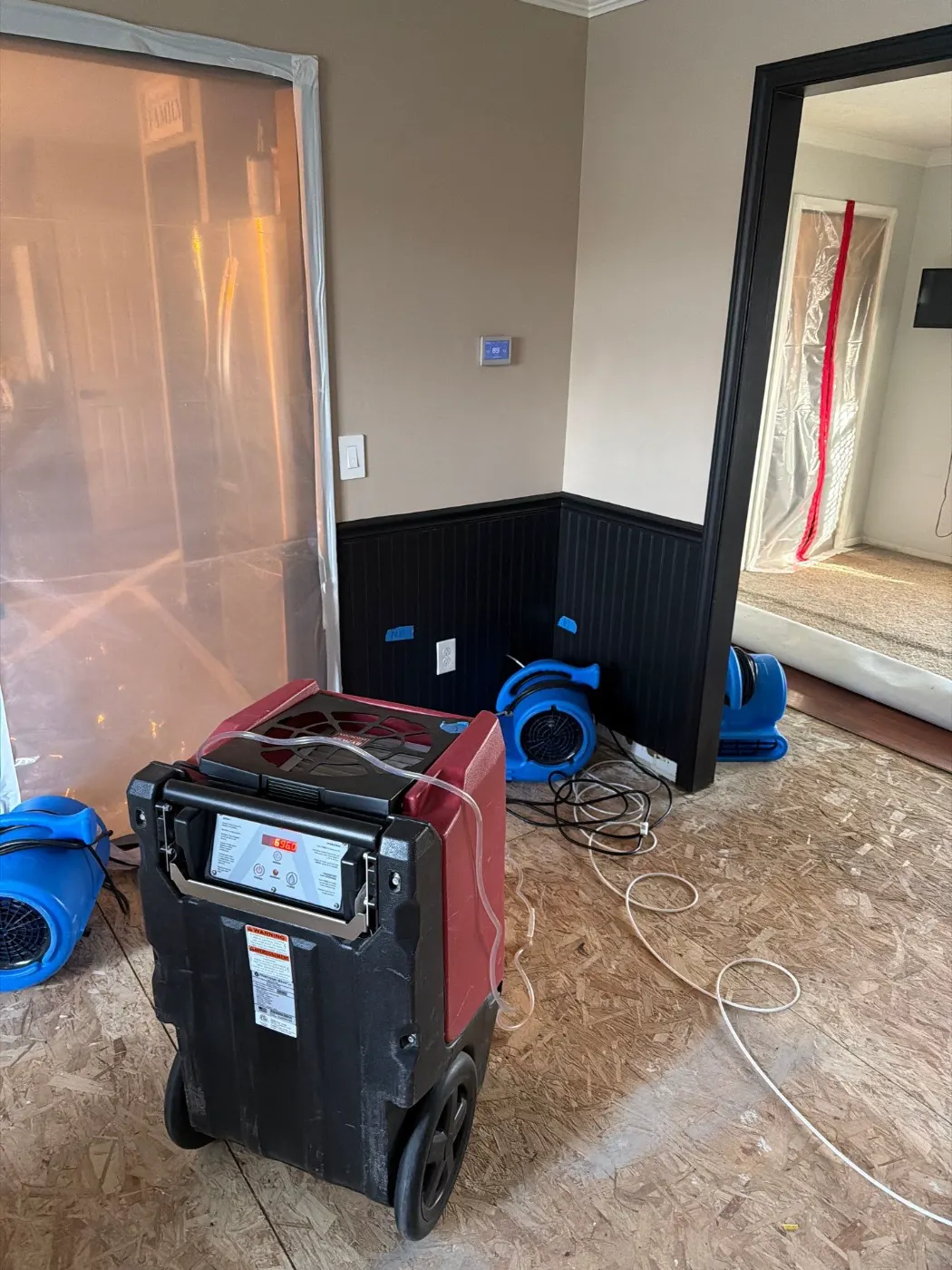
Air movers go where the mapping shows wet surfaces, and dehumidifiers get sized to the volume of the space being dried. Closed doors and poly sheeting seal off the drying area so the equipment works on the wet rooms only.
Photo Report
Entry point photos, the water path, the daily readings and the itemized scope go into a photo report you keep. The crew walks you through it, and you sign off on the scope in writing before there's any demolition.
Storm Damage in Dayton
Photographs from real storm damage jobs completed by our crew in Dayton and surrounding areas.
Storm Damage FAQ
Questions Dayton homeowners ask us about storm damage restoration.
Guidance and Standards for Storm Damage
- The National Weather Service office in Indianapolis posts summaries of recent central Indiana storm and flood events. NWS Indianapolis Event Summaries
- The Indiana Department of Insurance advises against permanent repairs before your insurance company inspects the damage. Check your own policy for what it covers. Indiana Department of Insurance: Insurance Claim Tips
Dayton Neighborhoods We Serve
We take storm damage calls in every part of Dayton. Pick your neighborhood for local details.
Other Restoration Services in Dayton
Dayton Water Restoration handles the full scope of restoration work. Explore our other services below.
Water Damage Restoration in Dayton
24/7 emergency response. IICRC certified water restoration from extraction to full dry out.
Learn more →Basement Flooding in Dayton
Basement water emergencies handled fast. Extraction, drying, mold prevention.
Learn more →Sewage Cleanup in Dayton
Category 3 biohazard cleanup. Full containment, decontamination, structural restoration.
Learn more →Request Storm Damage Restoration
Reach Us Directly
Our team is available 24/7 for emergencies and ready to schedule inspections during business hours.
Need Immediate Help?
For active water or mold emergencies, call us directly. We are available 24/7.