Water Restoration in Dayton Historic District, IN
IICRC-certified Dayton restoration crews serving Dayton Historic District homeowners with 24/7 emergency response, water extraction, mold remediation, and insurance documentation.
Dayton Historic District homeowners reach Dayton Water Restoration's live dispatch 24/7 for water emergencies: extraction, drying, sewage cleanup, and the documentation that keeps IN insurance claims moving.
- Services: water damage restoration, basement flooding, sewage cleanup, storm damage
- Service area: Dayton Historic District, Dayton, IN and surrounding areas
- Response time: Same day for Dayton Historic District inquiries; 24/7 emergency service available
- Licensed and insured (License #RC21100059)
- Serving Dayton, IN since 2018
Water Damage Restoration in Dayton Historic District
Listed on the National Register of Historic Places in 2003, this district comprises Dayton's oldest residential core, established from the mid-1800s through the early 20th century, with homes that are likely to contain original or replacement galvanized steel supply pipes and clay or cast iron sewer laterals well past their functional lifespan. Full basements are typical of this era's Midwestern construction and are susceptible to hydrostatic seepage, especially given the town's proximity to Wildcat Creek. Restoration crews dispatching to this district frequently encounter combination water loss scenarios involving aged supply lines, failing drain connections, and foundation wall moisture intrusion.
We have served Dayton Historic District homeowners through the full range of water emergencies, from burst pipes and basement flooding to mold remediation and sewage cleanup. Whatever the source, our Dayton crew responds 24/7 and works with your insurance carrier on approved claims.
Found Water on the Floor in Dayton Historic District? What to Do in the First Hour
Start by finding where it's coming from and turning off that water. If you can't find the source in a few minutes, shut the main valve for the whole house and keep looking from there.
Keep People Out
Close the door to the wet room if you can and keep kids and pets on the dry side of the house. Fewer people walking through also keeps the water from tracking into more rooms.
When It's Coming From Outside
Rain or melting snow can't be shut off at a valve, so work on what's inside. Move things away from the wet wall or window and set a bucket or towels where it's dripping until our crew gets there.
Lift Things Off the Floor
Move rugs and anything made of paper or fabric off the wet floor and into a dry room. Wood furniture can sit on squares of foil or plastic lids so the legs don't soak up water or stain the carpet.
Have Your Policy Handy
Find your homeowners policy or your insurance app so the policy number is easy to reach. Having it ready makes the call to your insurance company quicker once the water's off.
Which Details End Up in the Photo Report for Your Home in Dayton Historic District?
The report covers where the water started and what the moisture meter found in each room it reached. Each photo is labeled so you can match it to the room it came from.
The water's starting point and the path it took from there into the rooms it reached.
The flooring in each wet area, whether it's carpet or a hard floor, with the damage shown up close.
Readings that show where water moved behind walls and under floors, even where the surface looks dry.
Items that can't be saved, photographed before they're hauled off so there's a record of what they were.
Wet insulation or pad pulled from the work area, photographed before it's bagged and removed.
We document damage with a photo report and walk you through what we found, so you can decide with your insurance company. Keep the report with your policy papers, and check the policy itself for what it covers.
Restoration Services in Dayton Historic District
Every service Dayton Water Restoration offers across Dayton is available to Dayton Historic District homeowners.
Water Damage Restoration in Dayton Historic District
24/7 emergency response. IICRC certified water restoration from extraction to full dry out.
Learn more →Basement Flooding in Dayton Historic District
Basement water emergencies handled fast. Extraction, drying, mold prevention.
Learn more →Sewage Cleanup in Dayton Historic District
Category 3 biohazard cleanup. Full containment, decontamination, structural restoration.
Learn more →Storm Damage in Dayton Historic District
Storm related water emergencies. Tarping, extraction, drying, and full restoration.
Learn more →Commercial Water Restoration in Dayton Historic District
Commercial water emergencies handled with minimum disruption to your business operations.
Learn more →Commercial Flood Damage Cleanup in Dayton Historic District
Commercial flood response with minimum business disruption. IICRC Category 3 protocols when needed.
Learn more →Commercial Sewage Cleanup in Dayton Historic District
Category 3 sewage events in commercial properties. Full PPE, containment, and decontamination protocols.
Learn more →Commercial Mold Remediation in Dayton Historic District
Commercial mold remediation with containment, HEPA filtration, and clearance documentation.
Learn more →Commercial Storm Damage in Dayton Historic District
Commercial storm response, from tarping and water mitigation to the damage documentation your carrier asks for.
Learn more →Beyond Dayton · Cities We Cover
Dayton Historic District is one of several Dayton communities we serve. We also respond to water, mold, and sewage emergencies across Dayton, Tippecanoe County, and surrounding areas.
Other Dayton neighborhoods we serve: Kings Ridge, Weston Woods, Lexington Farms, Fairfield Lakes Area.
Other Parts of Dayton We Cover
The phone number and the process stay the same in each of these Dayton neighborhoods. Every page has notes on the homes in that area.
Kings Ridge
See how our crews handle water damage for homes in Kings Ridge.
Water restoration in Kings Ridge →Weston Woods
Water damage service for Weston Woods, with local notes on the homes there.
Water restoration in Weston Woods →Lexington Farms
Water damage help for homes in Lexington Farms, with notes on the housing there.
Water restoration in Lexington Farms →Fairfield Lakes Area
Our page for Fairfield Lakes Area covers water damage help for homeowners in that part of Dayton.
Water restoration in Fairfield Lakes Area →How Does Drying Work Over the Next Few Days in Dayton Historic District?
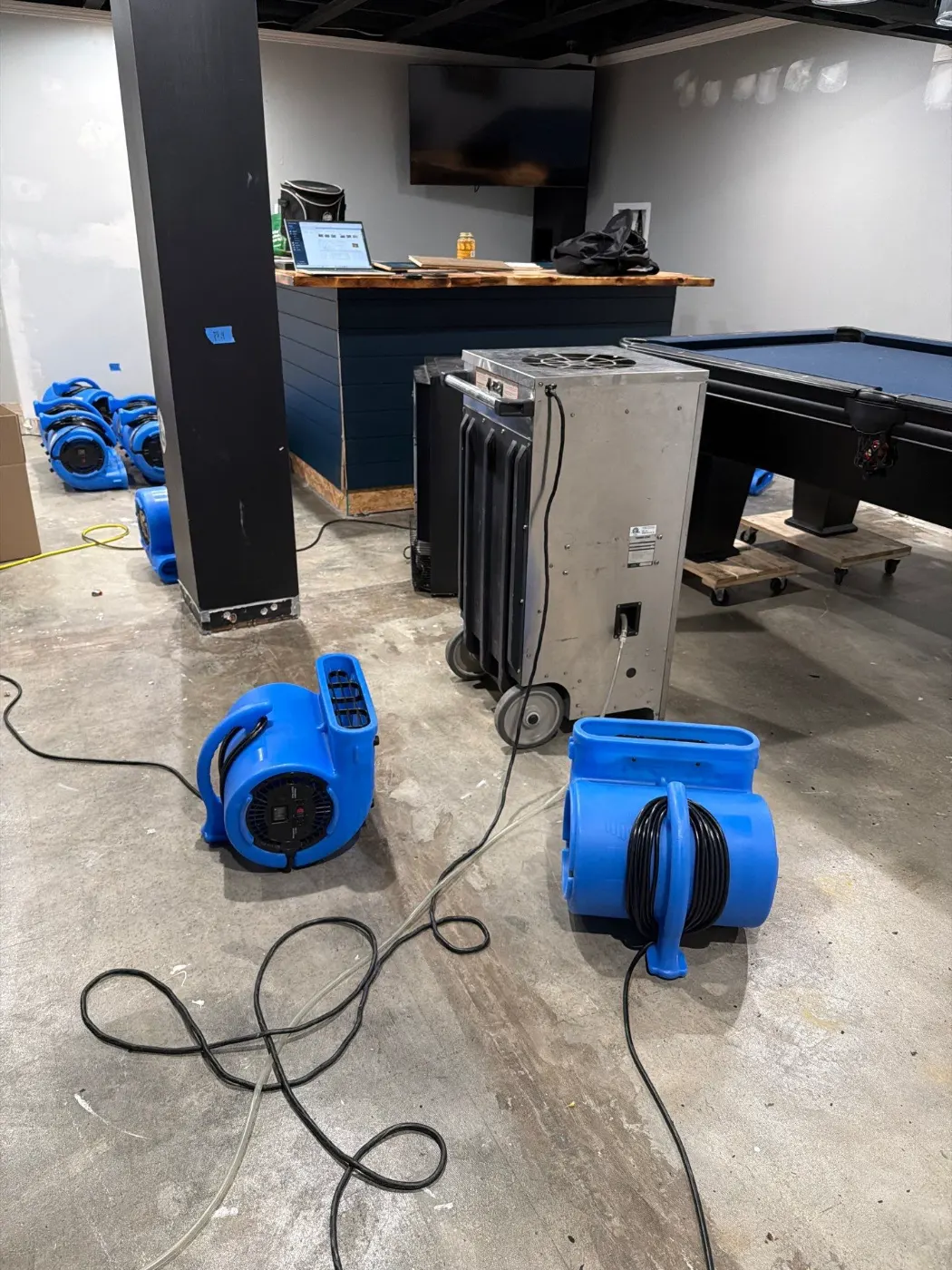
Drying runs over several visits, and the moisture readings at the same marked spots decide when each area is done. Our crew sets up the equipment on the first visit and adjusts it at each check after that.
Getting Air Moving
Air movers push air across wet surfaces while dehumidifiers pull that moisture out of the room. EPA's mold guide says that when wet materials get dried in the first 24 to 48 hours after a leak, mold won't grow in most cases, so the equipment goes in on the first day.
Each Check After That
On each return visit, the crew takes readings at the same marked spots and writes them down with the date. If an area isn't drying as expected, they move or add equipment to reach it.
When Equipment Comes Out
Air movers and dehumidifiers come out once the readings in each area show it's dry. The crew may pull equipment from one room while another keeps running.
If Mold Shows Up Later
If you spot mold after drying is done, EPA's mold guide says homeowners can usually clean areas smaller than about 10 square feet themselves. For a bigger area, call us to take a look.
Dayton Historic District Restoration FAQ
Questions we hear most often from Dayton Historic District homeowners after a water emergency.
Free Assessment in Dayton Historic District
Schedule a free, no-obligation damage assessment. We respond to all Dayton Historic District inquiries within a few hours.