Commercial Water Restoration in Dayton, IN
From the lift pit to the ceiling plenum, Dayton commercial water losses dried to documented readings.
For Commercial Water Restoration in Dayton, Dayton Water Restoration brings the equipment, the certifications, and the paperwork: 24/7 response, written scopes, and insurance claim support. Call (463) 241-6041 for dispatch.
- Service: Commercial Water Restoration for Dayton homeowners
- Service area: Dayton, IN and surrounding areas
- Response time: Around the clock dispatch; Dayton emergencies move to the front of the line
- Licensed and insured (License #RC21100059)
- Serving Dayton, IN since 2018
Commercial Water Damage Restoration in Dayton
We extract water and dry commercial buildings across Dayton, and we're available around the clock.
Site Conditions
Properties near Wildcat Creek and the Wabash River carry added flood risk in heavy rain. Freeze and thaw cycles each winter can burst pipes in unheated parts of a commercial building. Your building's own drains and roof get checked on the first walkthrough with whoever manages the property.
We cover commercial properties across Dayton, including the area around Dayton Town Hall and Walnut Street. We also handle commercial water losses in Clarks Hill, Shadeland, Lafayette and Battle Ground.
Commercial Water Restoration for Dayton Businesses
Water in the same room as a server rack changes what gets handled first. Power, hardware and the people responsible for that hardware all belong in the conversation before any drying equipment rolls in. Dayton Water Restoration dispatches a crew to commercial water losses in Dayton within 2 hours, coordinates deenergizing with your electrician, and holds the room under controlled humidity until the readings clear and your contractors sign off on bringing it back up.
Your management office gets the numbers every day. Dayton Water Restoration reads the same locations with the same meters, compares them with dry materials elsewhere in your Dayton building and sends the day's readings and photos. When a zone lags, the note says what changed and why, so you can brief ownership and tenants with real numbers.
Moving furniture is its own stage of a commercial job. Desks, chairs, shelving and pews get labeled with their location and lifted onto blocks or moved to dry staging in the order the zones open. Everything goes back where it came from after the readings clear. Dayton Water Restoration logs each move in the job records, so your Dayton office can see where every piece went.
Dayton Water Restoration documents the loss and gives you the scope, the readings and the photographs, and you decide with your carrier and your broker what to file. The scope separates the drying from the rebuild, and anything you add beyond the loss gets quoted on its own line. You see every number before work moves forward on your Dayton property.
Pick up the phone while the water is still being tracked down. Dayton Water Restoration dispatches to commercial losses in Dayton, traces where the water went with thermal imaging and meters, and documents every floor it reached. You receive the moisture map with the first day's findings.
Signs You Need Commercial Water Restoration
If you notice any of these in your Dayton building, schedule a free inspection before the issue worsens.
Baseboards swelling at the bottom of a wall in an office suite
Sewage backing up at a floor drain in a restroom, kitchen or loading area
Recessed lights flickering or a breaker tripping in a room with a stained ceiling
Drips from a ceiling mounted fan coil unit or a variable air volume box
A damp ring spreading across a suspended ceiling tile directly below a plumbing riser
Water wicking up the bottom of a metal door frame or steel stud track
Ice machine or dishwasher line leaking under equipment and spreading beneath the cove base
Drinking fountain supply line weeping inside a wall cavity
Standing water in the lift pit, or a pit alarm showing on the monitoring panel
Standpipe or sprinkler system testing that left water on a floor with no drain
How Dayton Water Restoration Handles Commercial Water Restoration
We follow these steps in order on every Dayton job.
Dispatch and Site Access
A crew dispatches to the property once the call comes in. The team sends the certificate of insurance and vendor paperwork ahead, so badging, loading dock use and freight lift access are cleared before the truck arrives.
Engineering Walkthrough
Walkthrough runs with your building engineer to isolate the source, confirm which risers and panels are involved, and identify occupied areas that have to keep operating. Access needs and after hours windows get set during the same visit.
Moisture Mapping
Every affected area gets read with thermal imaging and both noninvasive and penetrating meters, floor by floor where water moved vertically. The crew photographs the source, and the readings set how much drying equipment each area needs.
Structural Drying Design
Dehumidification gets sized from affected cubic footage and material porosity, with dry air ducted into ceiling plenums, wall cavities and shafts. Air movers get placed to keep surface air moving, and the calculation gets revised as readings change.
Tenant Notices and Updates
Plain language notices go out to the tenants in your Dayton building saying which areas are affected and when crews will be in the space. Updates follow as the readings change, with a contact name for questions.
Commercial Water Restoration in Dayton
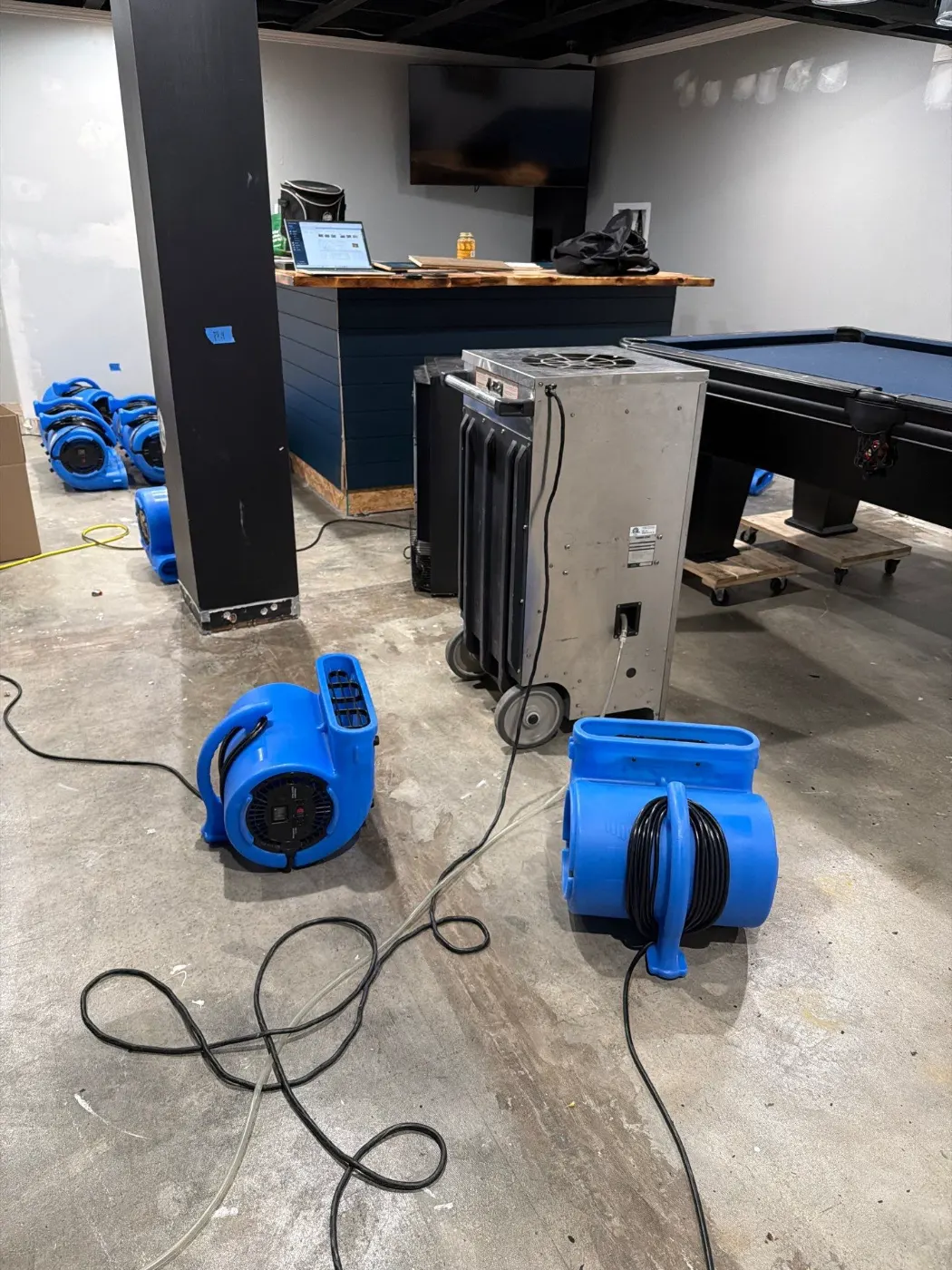
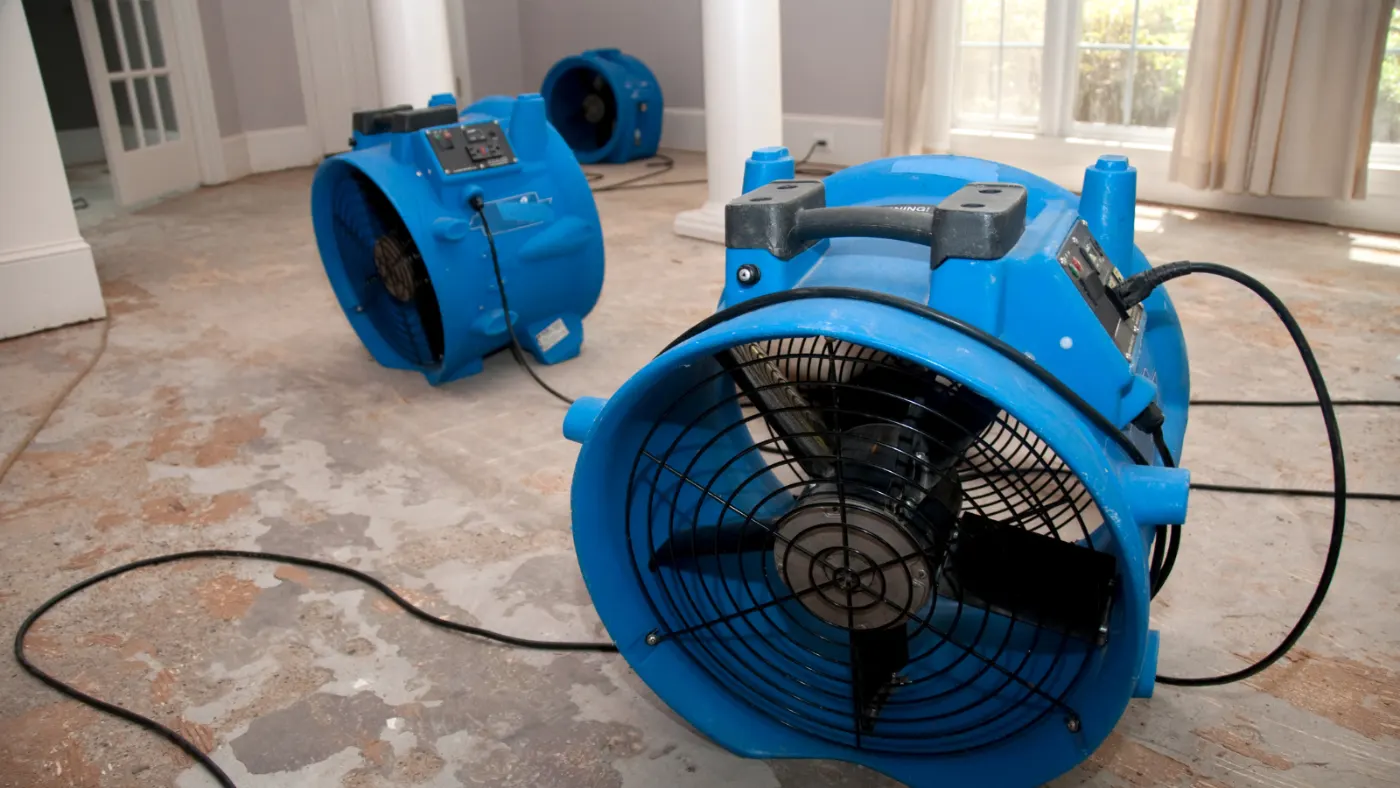
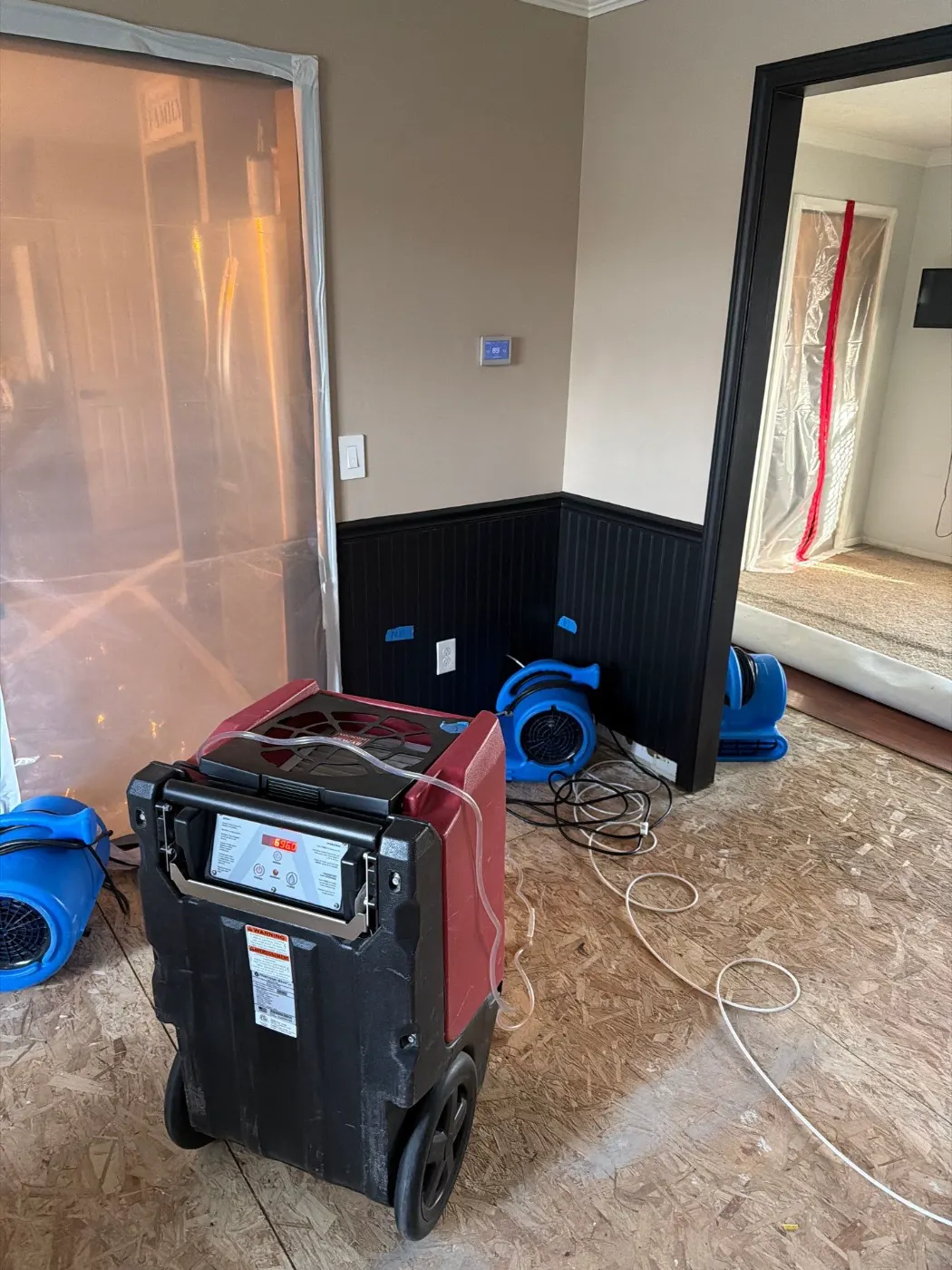
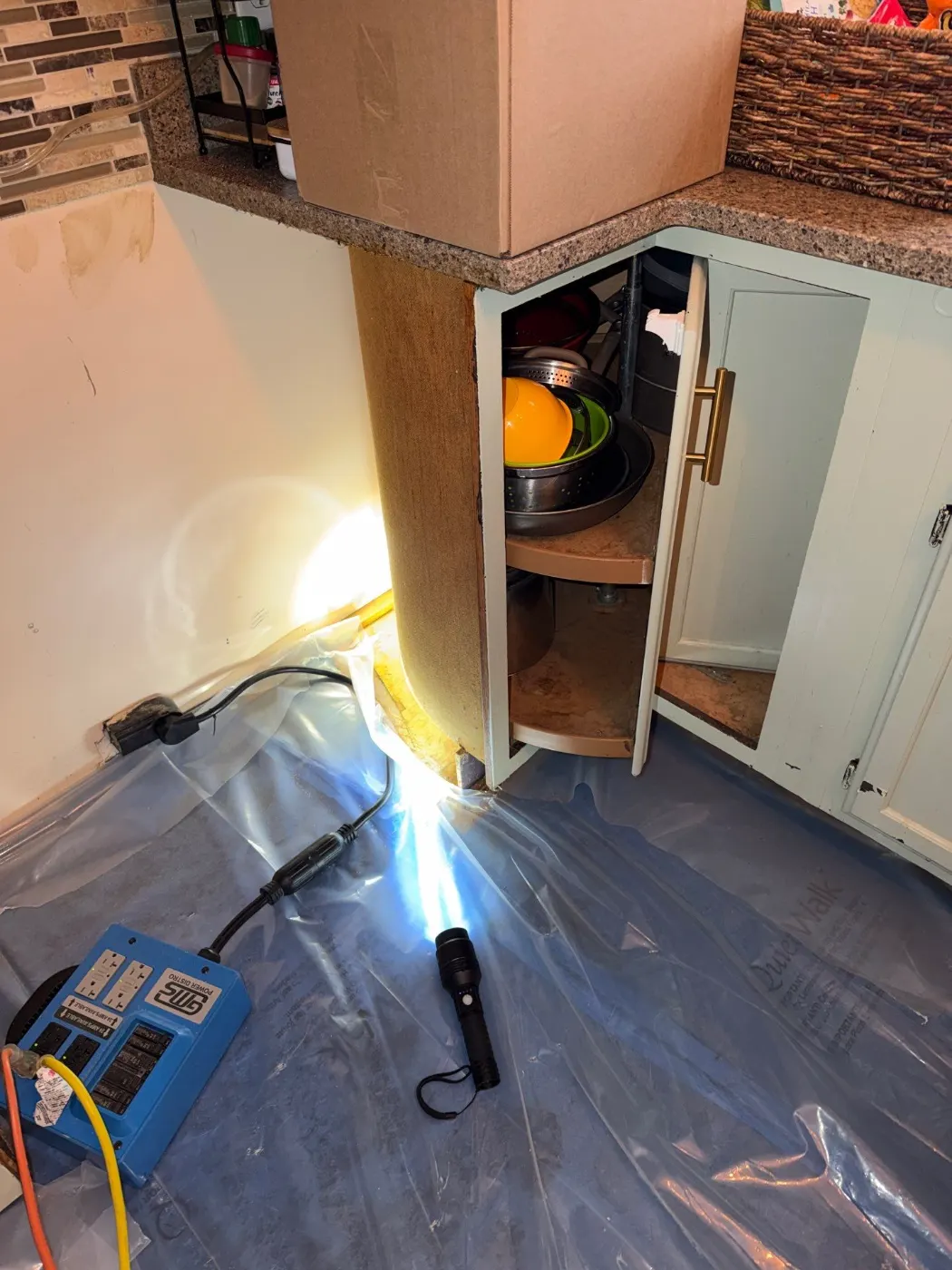
Photographs from real commercial water restoration jobs completed by our crew in Dayton and surrounding areas.
Commercial Water Restoration FAQ
Questions Dayton property managers ask us about commercial water restoration.
Guidance and Standards for Commercial Water Restoration
- The ANSI/IICRC S500 is the published standard for professional water damage restoration. The current edition is the Fifth Edition, 2021. IICRC S500 Standard
- EPA advises drying water damaged areas and items within 24 to 48 hours to prevent mold growth. EPA: A Brief Guide to Mold, Moisture and Your Home
Dayton Neighborhoods We Serve
We take commercial water restoration calls in every part of Dayton. Pick your neighborhood for local details.
Other Restoration Services in Dayton
Dayton Water Restoration handles the full scope of restoration work. Explore our other services below.
Water Damage Restoration in Dayton
24/7 emergency response. IICRC certified water restoration from extraction to full dry out.
Learn more →Basement Flooding in Dayton
Basement water emergencies handled fast. Extraction, drying, mold prevention.
Learn more →Sewage Cleanup in Dayton
Category 3 biohazard cleanup. Full containment, decontamination, structural restoration.
Learn more →Request Commercial Water Restoration
Reach Us Directly
Our team is available 24/7 for emergencies and ready to schedule inspections during business hours.
Need Immediate Help?
For active water or mold emergencies, call us directly. We are available 24/7.